
Lower the temperature. Keep the heat.
Energy use for heating and cooling a building is in essence a function of the required system temperature and of thermal conservation. Synenergi addresses both through its own design, the latest technologies and AI – in new and existing buildings.
Two ways to heat a large building.
Energy savings for heating are more than 80 % compared with traditional solutions, and the return on investment is normally 3–6 years, depending on the system it replaces – as stated by Synenergi.
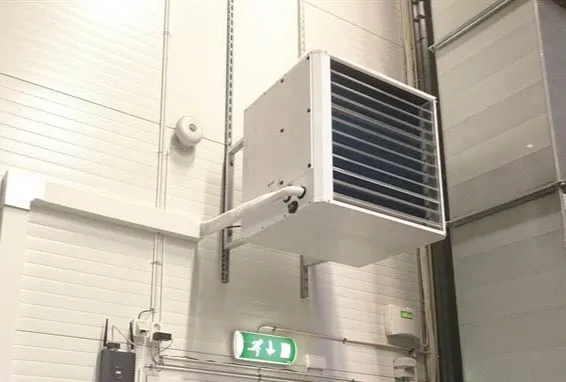 Traditional approach · hot air
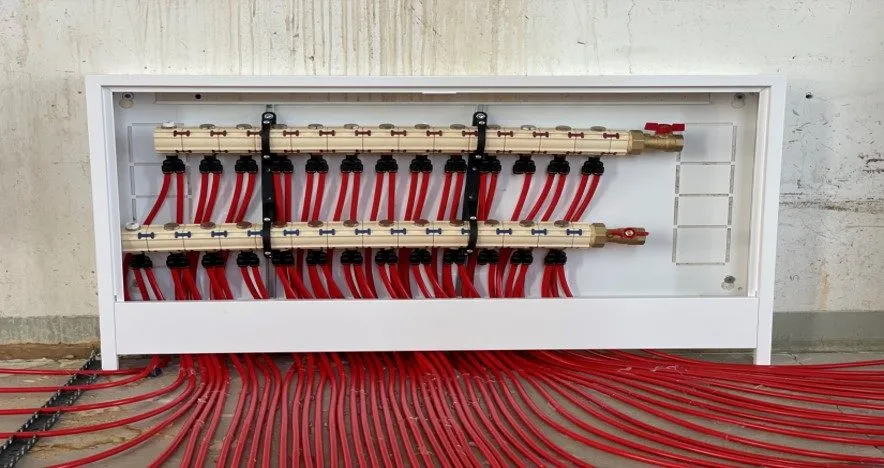 Synenergi · solid heat
Sourcing high-temperature heat, e.g. from gas boilers, district heating or electric boilers.
Sourcing low-temperature heat, e.g. from air-to-water heat pumps or water-to-water heat pumps – sewers, mine workings, data centres, solar thermal.
Distributing heat through aero tempers, i.e. by heating up the air in the building.
Distributing heat through the floor, i.e. by warming up the slab under the building.
Heat flows out with the air, e.g. when doors are opened in a logistics centre – requiring further input of energy.
The slab becomes a thermal battery that keeps the heat indoors. Less additional energy is required.
A separate cooling system has to be implemented – cooling down the air is not cost-effective.
Cooling is fully integrated in the system – reversing the heat pump cools down the slab.
From starting point to solution.
Two challenges: reduce the flow temperature as much as possible, and keep as much heat (or cooling) inside the building for as long as possible – with no negative impact on air quality.
- 01
Starting point
Energy use for heating and cooling is a function of the required system temperature – the temperature of the conduit of heating and cooling into the building – and of the thermal conservation in the building itself.
- 02
Reducing system temperature
Traditional systems operate at high temperatures, which limits the choice of heat source and reduces energy efficiency. Most buildings in Europe are heated by gas boilers to meet the requirements for indoor comfort; heat pumps are less efficient at high temperatures and therefore not a viable option there.
The required temperature can be lowered by expanding the size of the radiators, or by increasing the flow rate. Synenergi combines the two: a very dense, self-regulated underfloor heating system with a significantly higher flow rate heats buildings at a flow temperature below 26 °C. This makes it possible to design bespoke heat pumps with a COP of 5 or higher – and to use other low or no carbon sources such as geothermal energy, urban waste heat, solar thermal and low-temperature district heating.
<26 °Cflow temperatureCOP 5+bespoke heat pumps - 03
Increasing thermal conservation
Indoor heat is a valuable resource – you want to keep it for as long as possible while preserving air quality. A high degree of insulation is the obvious first step. Synenergi takes it several steps further:
- Using the floor as a thermal battery – heating the building itself, not only the air, preserves indoor heat much longer
- Re-distributing heat within the building
- Real-time synchronisation of ventilation, thermal storage in the floor and indoor air quality
- AI solutions to optimise energy input vs. output
The Synenergi thermal solution.
Reducing system temperature
- Self-regulated underfloor heating
- Dense network of pipes
- High flow rate
Broad choice of heat sources
- Heat pumps
- Geothermal
- Urban waste heat – data centres, sewers, etc.
- Low-temperature district heating
- Solar thermal
Increasing thermal conservation
- High degree of insulation
- The floor as a thermal battery
- Redistribution of heat within the building
- Real-time synchronisation of indoor parameters
- AI to optimise energy input vs. output
Discuss your building.
New build or retrofit – if the building stands on a concrete slab, we can look at what a low-temperature floor system would mean for its energy use, comfort and costs. Useful to mention: the size of the building, what it is used for and how it is heated today.
Synenergi is represented by Heatnet Global in all target markets.
Peter Anderberg, CEO · Heatnet Global